
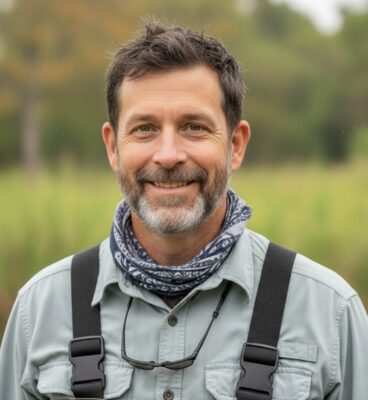
Environmental science careers span from field research and lab work to policy development and corporate sustainability. With median salaries of $80,060 and 4% projected growth through 2034, the field offers diverse pathways including wildlife management, environmental consulting, conservation science, and green technology. Most positions require a bachelor's degree in environmental science or related field, with master's degrees opening advanced research and management opportunities.
Welcome to your comprehensive guide to environmental science careers. Whether you're a student exploring majors or a professional considering a career shift, we understand that your passion for environmental protection isn't just an interest-it's part of who you are. Environmental science offers remarkably diverse career paths, from hands-on fieldwork studying ecosystems to policy positions shaping environmental regulations. This guide will help you navigate your options and find the path that aligns with your goals.
Careers in Environmental Science are so varied that it's difficult to categorize them. You could end up working from home most of the time or traveling around the world on an annual basis. You could be doing desk or field work, or a combination of both. Your focus could be mathematical, physical, or written. Of course, the majority of careers in Environmental Science involve some blend of all of these things.
Green Jobs in Environmental Science and Sustainability
When resource shortages, extreme weather events,s and sea level rise brought on by climate change start disrupting supply chains and hitting corporations where it hurts, all of a sudden you start seeing massive investments in the search for solutions.
This is what it's come to, and it's led to a surge in green jobs across the country, in almost every sector of both industry and government. The renewable energy sector alone has created hundreds of thousands of positions in solar installation, wind turbine technology, and energy efficiency consulting. Corporate sustainability roles-from carbon accounting to ESG (Environmental, Social, and Governance) reporting-are increasingly common among Fortune 500 companies, though adoption levels vary by industry and firm. Government agencies at the federal, state, and local levels are expanding their environmental divisions to address climate adaptation, water quality management, and conservation planning.
While the science behind environmental work has become ever more complex, the routine and day-to-day adoption of environmentally friendly technology, policy, and practices has made green jobs much more common and accessible at every level. It's still essentially a science-heavy domain where advanced degrees are standard. Still, there is a lot of vital work going on at the policy level and at the point where the rubber meets the road, including remediation and the technical work that goes into building solar arrays and other green infrastructure. This means there's a place for everybody with something to contribute. Jobs are booming in the green economy, opening up new opportunities for workers at every level of education.
Skills currently in high demand include data analysis and visualization, Geographic Information Systems (GIS), climate modeling, policy analysis, and stakeholder communication. Emerging roles include sustainability data analysts, climate resilience planners, circular economy consultants, and environmental justice coordinators. These positions blend traditional environmental science with business acumen, technology expertise, and community engagement skills.
You're still going to want to be really proactive in getting the education you need. The surge in jobs is matched by a rise in enrollments from workers eager to reskill for positions in an up-and-coming employment sector.
You'll find information about the different types of degrees that can lead you to the exact environmental job you're looking for, all broken down into the four major categories - environmental policy and planning, sustainability and the green economy, green agriculture and forestry, and environmental health. This is a field where education is everything and where degree offerings are almost as diverse as the many green jobs available.
To make it easy to connect the education requirements to the specific career paths, we've organized these categories according to the area of study and degree level it takes to find your career niche:
- Agriculture and Forestry
- Environmental Science
- Environmental Policy and Planning
- Public Health
- Sustainable Development and Engineering
Unveiling the Spectrum of Professions in Environmental Science
Wildlife Managers, Zoologists, and Horticulturists are often thought to have positions that keep them working in a mix of indoor and outdoor settings, but generally in one location. Oceanographers and Meteorologists could spend their entire careers in the safety of a laboratory working with high-level computer models, or much of their time at sea studying the weather.
Microbiologists, Soil and Plant Scientists, and Ecologists could work in remediation efforts, for sanitation companies, in manufacturing, at a university, for many private companies, law firms, not-for-profit groups, or government agencies such as the Environmental Protection Agency, the National Park Service, or the United States Geological Survey.
Knowing what is available to you professionally is half the battle when choosing a career. Finding something you enjoy doing within the broad scope of Environmental Science shouldn't be terribly difficult when there are so many options. Environmental Consultants may have the best of many worlds, setting their own schedules, seeking clients who need their particular expertise, and crafting their own blend of ideal fieldwork and intellectual work. Find what you enjoy doing, and it shouldn't be "work", but a career.
Solving Environmental Challenges: Specialized Career Paths for Environmental Scientists
Environmental scientists are problem solvers. They research environmental and health problems to determine their causes and develop solutions. They investigate issues such as mysterious frog deformations, unexplained cancer cases in a neighborhood, and disease in the former asbestos-mining town of Libby, Montana.
Environmental scientists research to identify the causes of these problems and to determine how to minimize or eliminate them. They also conduct theoretical research that increases our understanding of how the natural world works. They apply what they learn to make recommendations and develop strategies to manage environmental problems.
Environmental science is a holistic and multidisciplinary field that integrates the biological, physical, and earth sciences. Its goal is to understand how the Earth works and how it supports life. It also aims to identify, control, and prevent disruption to its systems and species caused by human activity.
Environmental scientists use their knowledge of Earth's systems to protect the environment and human health. They do this by cleaning up contaminated areas, making policy recommendations, or working with industry to reduce pollution and waste. They may also investigate the source of an environmental or health problem and devise strategies to combat it.
What Does an Environmental Scientist Do?
Environmental scientists conduct research to identify, control, or eliminate sources of pollutants or hazards affecting the environment or public health. Their research generally involves determining data-collection methods, collecting and analyzing air, water, and soil samples, analyzing environmental data gathered by others, and analyzing correlations with human activity. They also need to prepare reports and presentations that explain their findings.
Environmental scientists also develop plans to prevent, control, or address environmental problems such as air pollution. They may also advise government officials who make policy, and businesses that need to follow regulations or improve their practices-some conduct environmental inspections of companies. Many assess the potential effects of development projects to prevent the creation of new problems.
Some environmental scientists and specialists focus on environmental issues, while others focus on human health issues. Either way, they work on critical issues, solving some of the most important problems of our day.
Where Does an Environmental Scientist Work?
Most environmental scientists work for federal, state, or local governments, where they conduct research, advise on policy, and verify that businesses are following regulations. As of 2024, state governments employed the largest share of environmental scientists (28%), followed by management, scientific, and technical consulting services (19%). Local government agencies employed 13%, engineering services employed 10%, and the federal government employed 6%.
Environmental scientists work in offices and laboratories. While some may gather data and monitor conditions in the field, this is more likely to be done by technicians. Those who work in the field may find it demanding and work in all kinds of weather. Travel to client sites or conferences may be required. Most environmental scientists work full-time. They may work long or irregular hours in the field.
What Is the Average Environmental Scientist Salary?
The median annual salary for environmental scientists was $80,060 in May 2024. However, salaries vary significantly by industry, location, and experience level. Federal government positions offer the highest median wages at $113,980, reflecting the specialized expertise and regulatory responsibilities required at the national level. Engineering services pay a median of $77,960, while management and technical consulting services offer $77,420. Local government positions pay a median of $77,390, and state government roles pay $76,840.
| Industry Sector | Median Annual Salary (2024) | Work Environment |
|---|---|---|
| Federal Government | $113,980 | EPA, USGS, National Park Service; regulatory oversight |
| Engineering Services | $77,960 | Environmental design, infrastructure projects |
| Management & Technical Consulting | $77,420 | Private consulting, compliance, and client projects |
| Local Government | $77,390 | Municipal agencies, policy implementation |
| State Government | $76,840 | State environmental agencies, regulatory programs |
The salary range for environmental scientists is substantial. The lowest 10% earn less than $50,130 annually, while the highest 10% earn more than $134,830. Entry-level environmental scientists typically earn between $50,000 and $60,000 annually, while experienced professionals with advanced degrees and specialized expertise can earn $90,000 to $135,000 or more.
Geographic location also plays a significant role in compensation. Environmental scientists in states with high costs of living and concentrated environmental industries-such as California, Massachusetts, and Washington D.C.-tend to earn 15-25% above the national median. Career progression generally follows this trajectory: starting as an environmental technician or research assistant ($45,000-$55,000), advancing to ecological scientist or specialist ($70,000-$85,000), then to senior scientist or program manager ($90,000-$115,000), and potentially reaching director or principal scientist roles ($120,000-$140,000+) in consulting firms, federal agencies, or large organizations.
Environmental Science Jobs & Job Description
Environmental scientists work in applied fields and interdisciplinary settings, analyzing the effects humans have on the environment and the plants and animals that inhabit it. From agriculture to healthcare to industry, environmental scientists teach, research, and work in business to help humans understand our impact on the world around us.
Core responsibilities include developing research methods and systems best suited to the chemicals and environment under study. Scientists use observations, samples, and specimens to collect data, while continuously reviewing current scientific literature to stay abreast of developments in the field. They record and store observations both in the lab and during fieldwork, then develop systems to analyze better the data they've gathered. Presenting research findings to internal and external stakeholders through various media channels is essential, as is communicating with senior scientists and administrators through formal and informal reports.
A senior environmental scientist or chief researcher typically takes on additional project management and budgetary responsibilities. These professionals create project timelines and fiscal metrics while ensuring quality, integrity, and project organization throughout the research process. They track field and lab data, manage communications from the work group to stakeholders, senior administrators, and the public, and supervise field and lab work across overlapping project segments and work groups. Training and managing administrative support staff is also part of the role, as is constructing grant applications to secure funding for research initiatives.
What Is the Job Demand for Environmental Scientists?
The job outlook for environmental scientists is positive. Employment is projected to grow 4% from 2024 to 2034, about as fast as the average for all occupations. With approximately 90,300 environmental scientists currently employed nationwide, this growth will create about 4,000 new positions over the decade. About 8,500 job openings for environmental scientists are projected each year, on average, most of which result from the need to replace workers who transfer to other occupations or retire
Public interest in environmental hazards, climate change, renewable energy development, and water scarcity continues to drive demand for environmental scientists. Communities increasingly recognize the need for professionals who can analyze environmental problems and develop solutions to protect public health. The country's aging infrastructure will also need to be replaced with more sustainable alternatives, creating additional opportunities for environmental scientists to contribute to planning and implementation.
Many of the new jobs will be in private consulting firms that help clients manage environmental concerns and comply with regulations. However, most positions will remain in government agencies and academic institutions. Federal initiatives around climate change mitigation, the expansion of renewable energy projects, and increasing corporate focus on sustainability reporting are creating new positions across multiple sectors.
What Environmental Science Careers Are Available?
Environmental scientists often begin their careers as ecological technicians or research assistants. These professionals can work their way up to supervisory positions over time. Eventually, they may be promoted to program management or research positions. Other environmental scientists and specialists leave the private sector to teach or conduct research as faculty members in academia. Graduate study is often required for advancement and for academic positions.
Those engaged in Environmental Policy, Planning, and Management usually work for local government and are likely to be involved in a lot of research-intensive work. Environmental Lawyers may be able to get out of the office to the courtroom, or, again, have intensive desk jobs.
How Do I Get an Environmental Science Degree?
Most entry-level jobs require a bachelor's degree in environmental science or a related field such as microbiology, chemistry, physics, geosciences, or engineering. Students enrolled in environmental science programs study the sciences broadly, taking courses in biology, chemistry, geology, and physics. They may also take more specialized courses in hydrology and waste management. Social science courses in environmental policy, geography, and public administration are also beneficial for understanding the political and human dimensions of the field. Hands-on experience or coursework in computer modeling, data analysis, and geographic information systems is highly desirable.
Master's degrees may sometimes be required for advancement. Aspiring environmental scientists seeking academic careers will need a doctoral degree. Those pursuing advanced degrees may do well to major in a specific natural science such as chemistry, biology, physics, or geology, rather than a broader environmental science degree.
Read more about getting an online environmental science degree.
What Kind of Societies and Professional Organizations Do Environmental Scientists Have?
The American Geosciences Institute (AGI) is the premier professional association for geoscientists of all stripes. It hosts a data hub for information about educational programs and careers. It also provides professional development, publishes Earth magazine, and makes professional literature available through the GeoRef database.
The National Association of Environmental Professionals (NAEP) is a multidisciplinary association for all types of environmental professionals. NAEP organizes networking opportunities, including an annual conference and regional meetings and events. It also offers webinars and hosts a career center.
Other recommended resources:
- Association for Environmental Studies and Sciences
- National Council for Science and the Environment
- National Institute of Environmental Health Sciences
Frequently Asked Questions
What degree do I need to become an environmental scientist?
Most entry-level environmental scientist positions require a bachelor's degree in environmental science or a related field such as biology, chemistry, geology, or physics. A master's degree is often preferred for research positions and is typically required for advancement to senior roles. Doctoral degrees are necessary for academic positions and advanced research careers. Hands-on experience through internships and coursework in data analysis, GIS, and field methods significantly enhances employability.
What is the average salary for environmental scientists?
The median annual salary for environmental scientists was $80,060 as of May 2024. However, salaries vary widely by industry and location. Federal government positions offer the highest median at $113,980, while state and local government roles range from $76,840 to $77,390. The lowest 10% of environmental scientists earn less than $50,130, while the highest 10% earn more than $134,830. Geographic location significantly impacts earning potential, with coastal states and urban areas offering higher compensation.
Are environmental science jobs in demand?
Yes, environmental science careers are projected to grow 4% from 2024 to 2034, about as fast as the average for all occupations. With approximately 8,500 annual job openings projected over the decade, opportunities exist across government, consulting, and academia. Climate change concerns, renewable energy expansion, aging infrastructure replacement, and increased corporate focus on sustainability are driving demand. Private consulting firms are experiencing steady growth, though government agencies and academic institutions remain major employers.
Can I work remotely as an environmental scientist?
Remote work opportunities vary by role. Environmental scientists in policy analysis, data analysis, GIS mapping, report writing, and consulting often have remote or hybrid work options. However, positions involving field research, sample collection, site inspections, or laboratory work require physical presence. The COVID-19 pandemic increased acceptance of remote work in environmental consulting and government agencies, making flexible arrangements more common than in previous years.
What's the difference between an environmental scientist and an environmental engineer?
Environmental scientists focus on understanding environmental problems through research, data collection, and analysis. They study ecosystems, pollution sources, and environmental impacts to develop solutions. Environmental engineers apply engineering principles to design systems and technologies that solve environmental problems-such as water treatment facilities, waste management systems, and pollution control equipment. Scientists typically need degrees in environmental science or biology, while engineers require engineering degrees and often professional licensure.
Key Takeaways
- Career Diversity: Environmental science offers remarkably varied career paths-from field biologists studying wildlife to policy analysts shaping regulations, from corporate sustainability managers to environmental lawyers. This diversity means you can find a role that matches your interests, skills, and preferred work environment.
- Competitive Compensation: Environmental scientists earn a median salary of $80,060 nationally, with federal government positions offering $113,980. The field provides substantial earning potential, with the top 10% earning more than $134,830. Geographic location and industry sector significantly impact compensation, with opportunities for career growth into six-figure senior and management positions.
- Education as Foundation: A bachelor's degree in environmental science or a related field (biology, chemistry, geology) is the minimum entry requirement. Master's degrees open doors to advanced research and management roles, while doctoral degrees are essential for academic careers. Hands-on experience through internships and technical skills in GIS, data analysis, and field methods significantly enhance career prospects.
- Steady Job Growth: The field is projected to grow 4% through 2034, with approximately 8,500 annual job openings driven by climate change concerns, renewable energy expansion, aging infrastructure replacement, and corporate sustainability initiatives. Private consulting firms are experiencing steady growth, though government agencies and universities remain major employers with stable, long-term career opportunities.
- Multiple Career Pathways: You can work in government agencies (EPA, National Park Service, USGS), private consulting firms, non-profit organizations, academic institutions, or corporate sustainability departments. Career advancement typically progresses from technician to scientist to senior scientist or program manager, with opportunities to transition between sectors throughout your career.


Ready to start your environmental science journey? Explore accredited degree programs that match your career goals and geographic preferences. Find the right program to turn your passion for environmental protection into a meaningful career.
2024 US Bureau of Labor Statistics salary and job growth figures for Environmental Scientists and Specialists reflect national data, not school-specific information. Conditions in your area may vary. Data accessed January 2026.
Click on the highlighted areas below to learn more about each of these environmental career specialties.
Jump to Careers in Environmental Science
- Acoustical Engineer
- Aerospace Engineer
- Analytical Chemist
- Animal Psychologist
- Anthropologist
- Archaeologist
- Architect
- Architectural Historian
- Asbestos Abatement Manager
- Astronomer
- Atmospheric Dispersion Modeler
- Atmospheric Scientist
- Biochemist
- Bioinformatics Specialist
- Biological Oceanographer
- Biologist
- Biophysicist
- Biostatistician
- Biotechnologist
- Cad Technician
- Camp Counselor
- Chemical Oceanographer
- Chemist
- Climatologist
- Decontamination Technician
- Ecologist
- Emergency Disaster Response Technician
- Emt Paramedic
- Entomologist
- Environmental Biologist
- Environmental Biotechnology
- Environmental Chemist
- Environmental Data Analyst
- Environmental Engineer
- Environmental Geologist
- Environmental Health Safety Manager
- Environmental Health Safety Technician
- Environmental Health Safety Trainer
- Environmental Monitor
- Environmental Psychologist
- Environmental Sampling Technician
- Environmental Writer
- Ethnoarchaeologist
- Fire Fuel Manager
- Fire Protection Engineer
- Fire Safety Specialist
- Forensic Biologist
- Forensic Scientist
- Geneticist
- Geochemist
- Geodesist
- Geographer
- Geographic Information Systems Specialist
- Geological Oceanographer
- Geologist
- Geomagnetist
- Geomorphologist
- Geophysicist
- Geotechnical Lab Technician
- Gis Technician
- Groundwater Sampling Technician
- Habitat Restoration Engineer
- Habitat Specialist
- Hazmat Specialist
- Health Safety Engineer
- Herpetologist
- Historian
- Hydrogeologist
- Hydrologist
- Ichthyologist
- Immunologist
- Industrial Hygienist
- Instrumentation Calibration Technician
- Integrated Water Resources Manager
- Invertebrate Biologist
- Lab Technician
- Land Acquisition Manager
- Land Management Specialist
- Lead Abatement Technician
- Mammalogist
- Marine Biologist
- Marine Geologist
- Marine Science Educator
- Metallurgical Engineer
- Metallurgist
- Meteorologist
- Microbiologist
- Mineralogist
- Mining Engineer
- Mining Surveyor
- Modeling Specialist
- Mold Remediation Technician
- Molecular Biologist
- Naturalist
- Nepa Ceqa Manager
- Noise Expert
- Noise Impact Modeling Specialist
- Oceanographer
- Open Space Planner
- Ornithologist
- Paleobiologist
- Paleobotanist
- Paleoclimatologist
- Paleoecologist
- Paleoethnobotanist
- Paleomagnetist
- Paleontologist
- Paleozoologist
- Palynologist
- Parasitologist
- Petroleum Geologist
- Petroleum Technician
- Physicist
- Physiologist
- Pollution Prevention Technician
- Primatologist
- Radiation Protection Technician
- Regulatory Compliance Manager
- Remote Sensing Specialist
- Safety Director
- Safety Supervisor
- Sedimentologist
- Seismologist
- Snake Milker
- Speleologist
- Stratigrapher
- Treatment Storage Disposal Technician
- Volcanologist
- Wildlife Biologist
- Zoologist
Acoustical Engineer

Acoustical Engineers operating in an area of engineering primarily concerned with sound. They will be involved in the design and construction of civic works, residential and commercial/industrial real estate in conjunction with urban planners. However, this covers a diverse range of roles. Graduates with qualifications and expertise in Acoustical Engineering may design machinery, work with transport, agricultural equipment and medical diagnostics, concerning themselves with the sound issues related to design and manufacture. They will work in real estate to reduce noise pollution, in the entertainment industry to improve sound and in researching all aspects of sound waves through physical objects. It is expected that there will be a 10% increase in demand of this type of job within the engineering sector over the next few years, particularly in entertainment.
Learn more about how to become an Acoustical Engineer >>>
Aerospace Engineer

Learn more about how to become an Aerospace Engineer >>>
Analytical Chemist

Learn more about how to become an Analytical Chemist >>>
Animal Psychologist

Learn more about how to become an Animal Psychologist >>>
Anthropologist

Did you know that three new species of human have been discovered in the last 12 years? Now extinct, the Denisovans, “Hobbits”, and Red Deer Cave people survived until very recently, overlapping with modern humans. These discoveries, made by biological anthropologists, have shaken the anthropological world, and our understanding of ourselves as the only humans around for at least 20,000 years. Modern humans today are no less varied or interesting. Globalization has opened up a world of new opportunities for learning about other cultures. Cultural anthropologists study other societies (as well as our own) to understand human behavior. Anthropologists make fascinating discovering that unravel our past, introduce us to our neighbors, and help us understand what it means to be human.
Learn more about how to become an Anthropologist >>>
Archaeologist
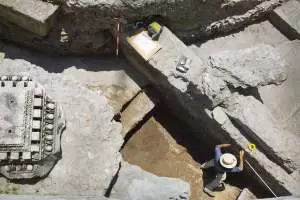
Have you ever dreamed of launching an expedition into an unknown world, uncovering lost tombs, discovering buried treasure, thwarting ancient curses and adventure! Movies and legends have portrayed Archaeology as a romanticised and sensationalist profession. While this is an exaggeration, Archaeology can still be an exciting and exhilarating career choice. If you want to discovering more about humankind's past and the secrets it holds, Archaeology may be the perfect career choice for you.
Learn more about how to become an Archaeologist >>>
Architect

Learn more about how to become an Architect >>>
Architectural Historian

Architectural Historians study, write about and preserve the architecture of our built heritage – buildings and urban landscape. They can work in many areas concerning buildings and built history due to the nature of their qualifications. Mostly, they will work in education such as public engagement for one of our local, state or Federal heritage bodies. They may work as buildings historians, or engage or advise on recreating historic buildings with authentic methods for the TV & movie industry, for living museums or to preserve the authenticity of a town by maintaining the aesthetic of new builds.
Learn more about how to become an Architectural Historian >>>
Asbestos Abatement Manager

Learn more about how to become an Asbestos Abatement Manager >>>
Astronomer
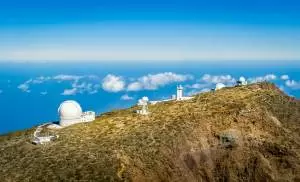
Have you been following the progress of the Mars rovers, or India’s impressive feat of entering Mars’ orbit on the first try? Did you hear about the European Space Agency’s asteroid landing? Did you know that we can tell what stars and planets are made of by studying the light they emit or reflect?
While astronomy is a universally interesting subject, the not-so-distant prospects of manned missions to Mars, moon colonies, and asteroid mining may make this the most exciting time to become an astronomer since the 1960s. The discoveries of dark matter and dark energy - invisible forces at work in the universe - go to show that there’s still much we don’t know about the cosmos. Who knows what amazing discoveries you might make as an astronomer!
Learn more about how to become an Astronomer >>>
Atmospheric Dispersion Modeler

Atmospheric Dispersion Modelers work with air quality professionals and meteorologists to determine how atmospheric pollutants may disperse over a local or wider area. Using this data, they design models and present them in digestible formats for stakeholders. They may work in a variety of roles but typically with government environmental bodies and meteorological services to predict and advise on air quality data and predict patterns of distribution. This data can have implications for other industries and decision makers, and be used in potential legal action against polluting businesses.
Learn more about how to become an Atmospheric Dispersion Modeler >>>
Atmospheric Scientist

Learn more about how to become an Atmospheric Scientist >>>
Biochemist
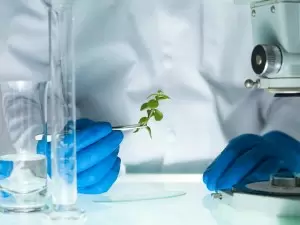
Biochemists study biological processes at the molecular level. While they study the small, their work makes a very large contribution to society. How things work at the molecular level affects an entire organism. Biochemists use their expertise to investigate the causes and effects of disease, and how to potentially suppress them. Some research how chemical pollutants and environmental toxins affect the microscopic workings of wildlife and people. And investigating plant processes can help us put them to work as contamination cleanup agents and fuels. Biochemists are curious about life and strive to solve important problems.
Learn more about how to become a Biochemist >>>
Bioinformatics Specialist

Learn more about how to become a Bioinformatics Specialist >>>
Biological Oceanographer
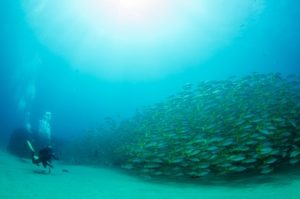
Biological Oceanography shares space with Marine Biology but it covers more. Whereas Marine Biology looks at the lifeforms that interact in the oceans, Biological Oceanography looks at the chemical makeup of the ocean and the impact of physical processes on life. Biological Oceanographers will look at the overall environment and ecology, taking into account such processes as tectonic plate movement, geology and jet streams.
Learn more about how to become a Biological Oceanographer >>>
Biologist

Learn more about how to become a Biologist >>>
Biophysicist

Biophysics is the science of biology as it applies to the physical world around us, specifically the laws of physics. Much like biochemistry, which is a bridge between biology and chemistry, it is a similar bridge between biology and physics. It is the examination of the complexity of life, evolution, and the mathematical laws behind nature and natural processes. They look at the largest life forms down to the smallest individual cells and biological “parts” that make up a body.
Learn more about how to become a Biophysicist >>>
Biostatistician

Learn more about how to become a Biostatistician >>>
Biotechnologist

Learn more about how to become a Biotechnologist >>>
Cad Technician

Learn more about how to become a Cad Technician >>>
Camp Counselor

Learn more about how to become a Camp Counselor >>>
Chemical Oceanographer

Learn more about how to become a Chemical Oceanographer >>>
Chemist

Learn more about how to become a Chemist >>>
Climatologist
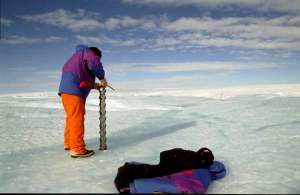
Learn more about how to become a Climatologist >>>
Decontamination Technician
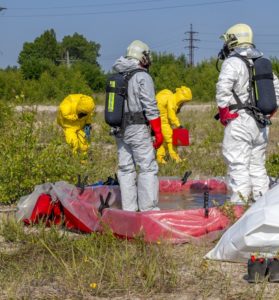
A Decontamination Technician or Decommissioning Technician is an essential part of the nuclear industry and the handling of other hazardous materials. Their role is to remove material dangerous to public health (like nuclear waste) or to clean up sites that have used such material. When a facility is decommissioned, individuals who work in this role are responsible for ensuring that safety procedures are followed with regard to public health and environmental contamination. They will decontaminate the facility in the process of decommissioning.
Learn more about how to become a Decontamination Technician >>>
Ecologist

Learn more about how to become an Ecologist >>>
Emergency Disaster Response Technician
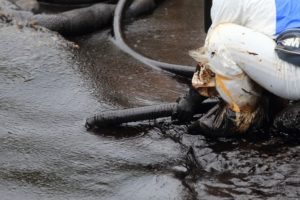
Learn more about how to become an Emergency Disaster Response Technician >>>
Emt Paramedic

Learn more about how to become an Emt Paramedic >>>
Entomologist

The great Harvard entomologist Edward O. Wilson once said, "If insects were to vanish, the environment would collapse into chaos." Insects play a critical role in the earth’s ecosystems. They control pests and recycle nutrients. As pollinators, they’re also vital to agriculture. Some species can be detrimental to crops, trees, and animals. Entomologists, scientists who study insects, unravel these relationships. They investigate important issues like the mysterious die-offs of commercially owned bees called "colony collapse disorder". They use their knowledge of insects to protect crops, people, livestock, and the planet.
Learn more about how to become an Entomologist >>>
Environmental Biologist
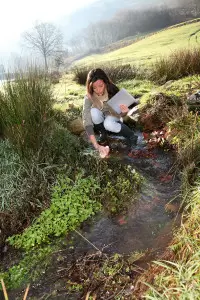
Fortunately, the United States has a variety of laws and regulations in place to help protect the environment. Still, we can't clean up ecosystems or protect the organisms in them if we don’t know there's a problem. Environmental biologists monitor environmental conditions such as water quality and assess the health of ecosystems, often by studying "indicator species" like worms living at the bottom of water bodies. While less than glamourous, these species can provide a picture of the overall health of an ecosystem. They also investigate how development projects might affect ecosystems and the organisms that live in them. Their recommendations can lead to plan modifications that better protect the environment.
Learn more about how to become an Environmental Biologist >>>
Environmental Biotechnology
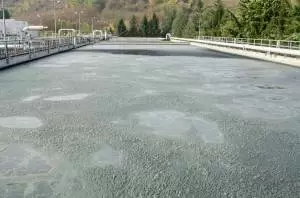
Nature is the ultimate engineer. It manufactures all kinds of things, from spider webs to bone, all perfectly fine tuned for their functions. And it does it all through incredibly efficient processes that recycle everything, generating zero waste. Environmental biotechnologists have been taking notes from nature. These professionals use natural organisms and processes to clean up contaminants, making the chemicals just another resource. For example, environmental biotechnologists use tough microbes and plants to clean up contaminated environments. Thanks to these workers, former industrial sites can be made safe and redeveloped, improving local environments, health, and economic activity. Other environmental biotechnologists work to make the very heart of our economy more sustainable by creating plant-based biofuels and bioplastics. Either of these specializations can lead to a promising and rewarding career.
Learn more about how to become an Environmental Biotechnology >>>
Environmental Chemist
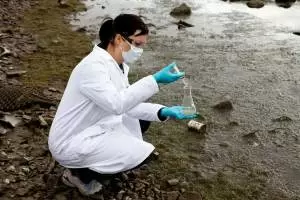
Learn more about how to become an Environmental Chemist >>>
Environmental Data Analyst

Learn more about how to become an Environmental Data Analyst >>>
Environmental Engineer

Learn more about how to become an Environmental Engineer >>>
Environmental Geologist
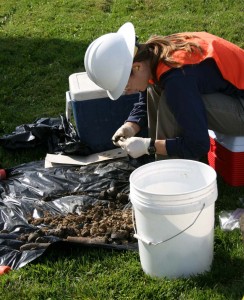
Learn more about how to become an Environmental Geologist >>>
Environmental Health Safety Manager

Environmental Health and Safety Managers work in the realm of public health & safety, health and safety at work and risk assessment – all from the angle of environmental issues. This includes risks both from and for the environment, based on the actions of individual people, businesses and their practices. They are responsible for enforcing health & safety legislation in places of work and recommending improvements to organizational practices. They can work in private and public sector, offering advice and technical services to help improve health and safety in the environment.
Learn more about how to become an Environmental Health Safety Manager >>>
Environmental Health Safety Technician
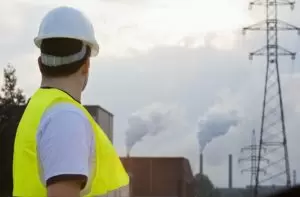
Environmental Health and Safety Technicians design and implement systems to ensure safe practice for people, ecology and environment. They may be in charge of procurement and fitting of devices designed to improve health and safety. They will not be responsible for taking decisions about policy but will be on the front line of consultation and implementation for both indoor and outdoor environments. They require analytical and communication skills to liaise between front line employees and decision-makers.
Learn more about how to become an Environmental Health Safety Technician >>>
Environmental Health Safety Trainer
Learn more about how to become an Environmental Health Safety Trainer >>>
Environmental Monitor
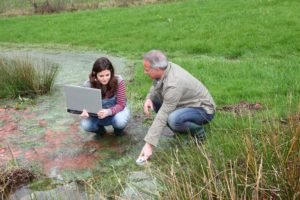
Environmental Monitors sample the environment around us – the air, water and soil – to look for certain elements. Typically, they will look for chemicals, bacteria or other life forms, and imbalances in the environmental profile. There are many purposes to this, but normally they are looking for pollution, radiation or other problems that could cause short or long-term issues. Environmental Monitors might examine ozone levels of the upper atmosphere or try to work out the effectiveness of workplace ventilation. They are usually looking for things that can affect human, animal or environmental health.
Learn more about how to become an Environmental Monitor >>>
Environmental Psychologist

Learn more about how to become an Environmental Psychologist >>>
Environmental Sampling Technician

Learn more about how to become an Environmental Sampling Technician >>>
Environmental Writer

If you’re passionate about the environment, have a way with words, and are better with a pen than a pipette, environmental writing may be an excellent way to combine your interests and skills. Environmental writers develop and share their expertise on a topic such as water or wildlife. Or, they learn about new topics, issues, and technologies. Environmental writers help publicize the potential solutions and brilliant minds that are shaping our energy and environmental future. They also uncover new environmental challenges, bringing them to the attention of policymakers and the public.
Learn more about how to become an Environmental Writer >>>
Ethnoarchaeologist

Ethnoarchaeology is the ethnographic study of technologically primitive people in order to understand elements of our past in an existing context. The aim is to explain phenomena in a number of prehistoric and historic archaeological areas including environment, belief, technology, social development, roles and attitudes, and agriculture (the technology, the process and the social perspective). Ethnoarchaeology helps us understand those elements of archaeology that we cannot always ascertain and about which we can only theorize.
Learn more about how to become an Ethnoarchaeologist >>>
Fire Fuel Manager
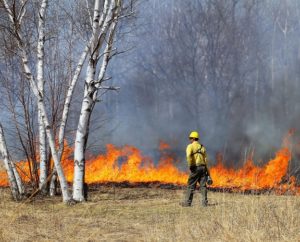
Fire and Fuel Managers work at our local, state and national parks or anywhere else that there is extensive woodland that could suffer the effects of forest fire. There has been an increasing need for these in the last few years, particularly in the western states where forest fires are becoming more intense and regular. They help control fires and maintain forest to promote new growth as well as administering controlled fires to keep the ecology healthy and prosperous. They are, essentially, forestry managers with a stronger focus on ecology and the role of fire and the fuel that drives it.
Learn more about how to become a Fire Fuel Manager >>>
Fire Protection Engineer

Fire Protection Engineers are tasked with the design and implementation of system for improving fire safety. They devise and install fire protection equipment and ensure proper use of that equipment. It applies the science of engineering to protect environments, property and people from the effects of fire and smoke. They may specialize in detection, mitigation, prevention or general safety. They have a variety of roles available to them, anywhere there may be a requirement to design electronic or other physical systems for fire safety.
Learn more about how to become a Fire Protection Engineer >>>
Fire Safety Specialist
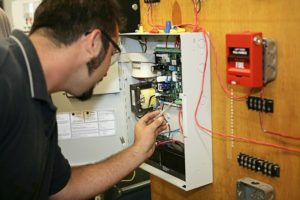
Learn more about how to become a Fire Safety Specialist >>>
Forensic Biologist

Learn more about how to become a Forensic Biologist >>>
Forensic Scientist
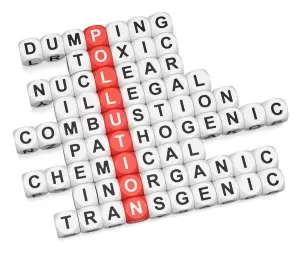
Abandoned mines and industrial "brownfields" unfortunately pepper the American landscape. But there’s more than what meets the eye – groundwater contamination is an issue of growing concern, largely due to wastewater injection and fracking for natural gas. Fortunately, environmental forensic scientists are on the case. At abandoned mines and brownfields, they help identify the contaminants present and how long they’ve been there, which can help determine which company is responsible. They also determine the nature and cause of contaminated wells or groundwater.
Learn more about how to become a Forensic Scientist >>>
Geneticist

Learn more about how to become a Geneticist >>>
Geochemist

Geochemists use chemistry as a tool to examine volume and distribution of chemicals as aspects of mineral and rock profiles. They also examine how and why such chemical elements end up in the air, in our soils, water systems and as nutrients or food supply, and also the processes that turn organic matter into fossil fuel over geological time. They can work in a variety of industries, from water quality monitoring to fossil fuel prospecting, to chemistry research and academia, and even in rock dating.
Learn more about how to become a Geochemist >>>
Geodesist

Geodesists are mapping specialists involved in taking complex measurements of geographic areas, Unlike GIS technicians, they measure and record the large planetary motions such as tides, fault lines, polar motions and gravity. Their methods may have changed in line with technology, but theirs is one of the oldest environmental sciences in the world. With this study, humans have been able to cross the oceans and map our continents, plan growing seasons and fishing; they have contributed to our very survival. Today, they work with astrophysicists, able to measure the distances between stars and galaxies. They are crucial in measuring just about anything.
Learn more about how to become a Geodesist >>>
Geographer
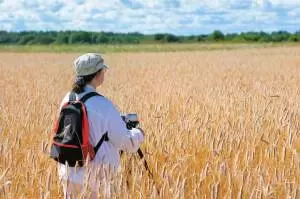
What do melting ice caps have to do with climate refugees in Southeast Asia? How is 3D printing related to reducing carbon emissions? How did the Mississippi River come to be, and what will happen to it in the future?
These are just a few of the questions that geographers investigate. While the word “geography” may make you think of the TV show Jeopardy, it involves much more than memorizing states and world capitals. Geography is a dynamic field that’s all about studying dynamic processes and relationships. If you’re curious about how the planet works, or about relationships between the earth and its societies, a career in geography may be for you.
Geographers are at the epicenter of the growing focus on environmental sustainability. Due to the interdisciplinary nature of geography, geographers are well-positioned to study environmental changes, and how these changes relate to humanity. Geographers can also help policymakers, corporations, and other key players understand interactions between people and the environment, and how to make them more sustainable.
Learn more about how to become a Geographer >>>
Geographic Information Systems Specialist

We’ve all heard the adage that a picture is worth a thousand words. It’s certainly true with maps, which is why they’ve been popping up everywhere. Maps can get information across quickly, often providing a new perspective. The proliferation of mapping apps and tools means that anyone can make their own simple maps. However, geographic information systems (GIS) is about more than just displaying data on a map – it’s also largely about analyzing it. Overlaying multiple different layers of data about the same location in a GIS allows specialists to query them in terms of their spatial relationships with each other. This approach can lead to new insights. GIS specialists use professional-level, sophisticated software to display, query, and analyze data for a wide range of applications.
Learn more about how to become a Geographic Information Systems Specialist >>>
Geological Oceanographer

Geological and Geophysical Oceanographers, also known as Marine Geology and Geophysics, look at the physics and geology of the oceans. This includes thermal activity, the effects of gravity and electromagnetic waves and processes that make up the oceans. They study rocks, rock formations and natural processes using specialist technology and record them for other specialists. Their remit is the physics of oceans and how they can affect the chemistry and biology. They examine the natural movements of the Earth to understand what effects it has on life in the oceans.
Learn more about how to become a Geological Oceanographer >>>
Geologist
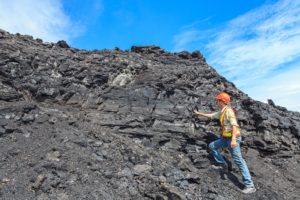
Learn more about how to become a Geologist >>>
Geomagnetist
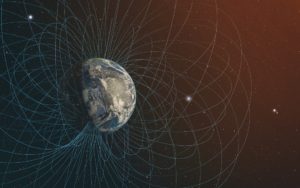
Learn more about how to become a Geomagnetist >>>
Geomorphologist

Learn more about how to become a Geomorphologist >>>
Geophysicist
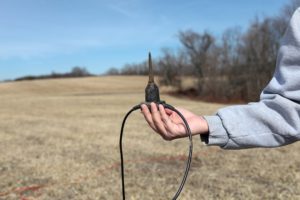
Learn more about how to become a Geophysicist >>>
Geotechnical Lab Technician
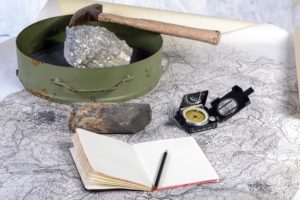
A Geotechnical Lab Technician specializes in lab sampling and testing for geotechnical data – that includes soils and silt, water sampling, air sampling and anything else related to topography. In an increasingly specialized environmental science including legal, policy and health, we need these specialists who known how to treat, record and handle environmental and topographical samples. They are applied scientists with a knowledge and understanding of geographical issues whose skills are required in a range of areas.
Learn more about how to become a Geotechnical Lab Technician >>>
Gis Technician

Learn more about how to become a Gis Technician >>>
Groundwater Sampling Technician
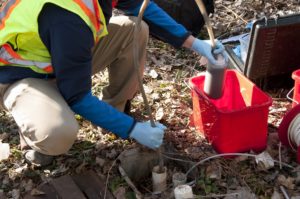
Groundwater Sample Technicians work alongside many other types of environmental scientists such as engineers, ecologists and conservationists. They examine water samples for such properties as pollution levels (and whether those levels are safe or break the law), existing microorganisms (viruses, bacteria etc) or simply to determine environmental change over time. Their roles vary from public prosecution to safety monitoring and public health, or to build a picture of the make-up of an area for development.
Learn more about how to become a Groundwater Sampling Technician >>>
Habitat Restoration Engineer

Habitat Restoration Engineers are a type of Ecological Engineer that modifies an ecosystem, typically restoring it to a former state. They understand the problems caused by fire (natural or artificial), invasive species or other factors that make a significant alteration to an ecosystem. Part conservationist, part engineer and part environmental scientists, Habitat Restoration Engineers have a broad range of skills with multiple applications. They may work in planning and design or in the field implementing those designs.
Learn more about how to become a Habitat Restoration Engineer >>>
Habitat Specialist

Learn more about how to become a Habitat Specialist >>>
Hazmat Specialist
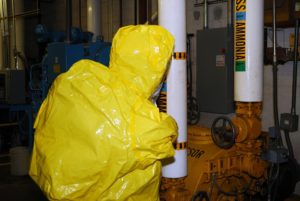
HAZMAT (or Hazardous Material) Specialists perform inspections and analyses of premises to ensure that the property and the people who work within it are handling, storing and using the hazardous materials correctly. They spend their time between offices producing reports and visiting sites to ensure compliance. They are not usually involved in handling and removal, but in the management and monitoring and advising people who make decisions about the material.
Learn more about how to become a Hazmat Specialist >>>
Health Safety Engineer

Learn more about how to become a Health Safety Engineer >>>
Herpetologist

Learn more about how to become a Herpetologist >>>
Historian

History is one of the core humanities. It teaches us about the events and people of the past and provides us with valuable lessons today. It is important for cultural identity of a people, region or country and is cherished as an important aspect of our humanity. Increasingly, it is using primary data provided by archaeology to build an image of the events of the past, not just its traditional realm of historical documents. Many jobs require or prefer to hire historians today, not just education. The modern discipline is a broad subject that teaches transferable skills.
Learn more about how to become a Historian >>>
Hydrogeologist
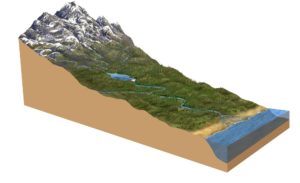
Learn more about how to become a Hydrogeologist >>>
Hydrologist
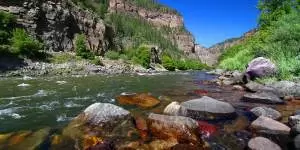
Water – it’s the key to life. We came from it, and can’t do without it. Where water goes haywire, you’ll find droughts, floods, and sinking coastlines. It may sound like a disaster movie, but due to climate change, these phenomena are projected to occur more often in certain areas over the years to come. Hydrologists play a key role in studying and predicting these occurrences at the local level, and assessing their potential impacts. They’re critical to communities’ efforts to adapt to climatic shifts. They’re also essential for managing water supplies for cities, industry, agriculture, and wildlife.
Hydrologists also help assess the potential impacts of proposed mining operations, large-scale farms, and industrial sites. They may also help restore contaminated surface water or groundwater to a more natural condition. People who choose a career in hydrology will have many opportunities to contribute to environmental sustainability.
Learn more about how to become a Hydrologist >>>
Ichthyologist

Ichthyologists are scientists that devote their time to studying the history, behavior, growth patterns, and environmental significance of different kinds of fish. They may also work to educate the public about the species’ importance to different ecosystems to advance conservation efforts. Most of these scientists spend their workdays performing fieldwork and collecting data or working in a laboratory analyzing data and creating reports. Some Ichthyologists work in museums and institutes of higher education, where they may be required to give presentations on the behaviors and environmental significance of certain fish types. Most of these scientists hold a bachelor’s degree at minimum, but many go on to obtain their master’s or doctorate degrees.
Learn more about how to become an Ichthyologist >>>
Immunologist

Learn more about how to become an Immunologist >>>
Industrial Hygienist

An Industrial Hygienist is involved in a wide range of situations to promote workplace safety. They anticipate potential problems and conduct practical work in the identification, prevention and mitigation of workplace health issues. They may work with industrial chemicals, examine ventilation and design systems for the safe use of potentially toxic materials. They are a type of occupational safety professional, but concerned with physical health and the use of dangerous substances in a safe manner. They are also legal experts in their use.
Learn more about how to become an Industrial Hygienist >>>
Instrumentation Calibration Technician
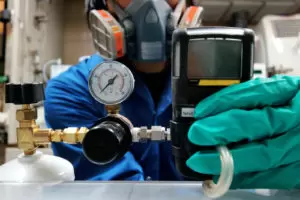
An Instrumentation Calibration Technician works with electronic devices used in laboratory work. Their role is to calibrate equipment, validate, check all parts are functioning properly and monitor for faults and problems that may affect the outcome of an experiment. They work with centrifuges, stability chambers and incubators amongst others. It is their responsibility to ensure that such electronic equipment is operating correctly. If any part is at fault, they may be expected to carry out a repair, replace it or order new parts.
Learn more about how to become an Instrumentation Calibration Technician >>>
Integrated Water Resources Manager

The job of an Integrated Water Resources Manager is to balance the economic needs of water supply against social benefit and environmental protection. They co-ordinate the development of civic works to ensure that the water supply is sustainable, safe and sufficient for requirements. This can be a large juggling act to ensure that the people who use the water get enough of it, and to ensure minimum environmental impact. They often work in government agencies and with engineering firms, working with various stakeholders to ensure a project runs smoothly.
Learn more about how to become an Integrated Water Resources Manager >>>
Invertebrate Biologist

Learn more about how to become an Invertebrate Biologist >>>
Lab Technician

Learn more about how to become a Lab Technician >>>
Land Acquisition Manager

Land Acquisition Managers effectively work as Real Estate managers for companies and businesses looking to acquire land for development for their business interests rather than to purchase for the purpose of development and sales. Businesses of all sizes require property for their premises and that is why they might require the use of Land Acquisition Managers to speculate on, buy up, sell and develop land in the business’ interests. They are not realtors and are not land agents, and do not work managing land day to day, but work on behalf of a business for development.
Learn more about how to become a Land Acquisition Manager >>>
Land Management Specialist

Learn more about how to become a Land Management Specialist >>>
Lead Abatement Technician

Learn more about how to become a Lead Abatement Technician >>>
Mammalogist
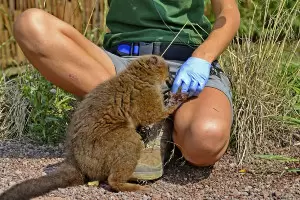
Mammalogists observe and study the lives of particular mammals in a number of different capacities. The exact nature of the work depends on the Mammalogist's specialty, which can range from the behaviors of a particular mammal to the taxonomy of multiple mammalian groups. Some Mammalogists are required to observe mammals in their natural habitat, meaning that they must travel out into the field and spend a great deal of time alone in potentially adverse weather conditions. All Mammalogists possess at least a bachelor's degree in zoology, ecology, or other field, though many go on to obtain their master's or Ph.d. Though the anticipated growth of this profession is relatively slow, the profession's importance has become more important than ever thanks to growing environmental concerns and ever-increasing human populations.
Learn more about how to become a Mammalogist >>>
Marine Biologist
Learn more about how to become a Marine Biologist >>>
Marine Geologist
Learn more about how to become a Marine Geologist >>>
Marine Science Educator

A Marine Science Educator works in a variety of areas, sometimes with public interaction such as at tourist facilities, conservation areas and research stations where the public may be invited. This type of role is different from a teacher as adult learners and a general audience requires different methods and levels of information. In the conservation of our marine spaces, public awareness is vital to promoting respect for the environment, fundraising and public education. This is why we need marine science educators in non-school environments.
Learn more about how to become a Marine Science Educator >>>
Metallurgical Engineer

Learn more about how to become a Metallurgical Engineer >>>
Metallurgist
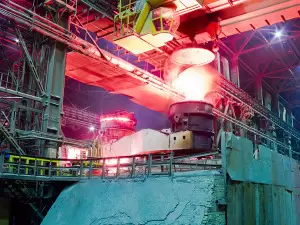
Metals are crucial to nearly every aspect of modern society, from bridges to skyscrapers to smartphones. Metallurgists are engineers who study the properties of metals so we can extract them from ores and use them efficiently. They make sure that the right metal is used to make the right product, and test for product quality. Their efforts help make things made with metals safe. They can also make extraction and manufacturing processes, as well as the products themselves, more efficient, making them easier on the environment.
Learn more about how to become a Metallurgist >>>
Meteorologist
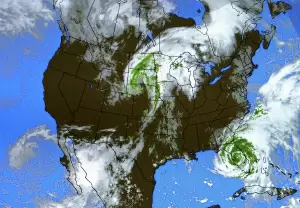
Learn more about how to become a Meteorologist >>>
Microbiologist

Learn more about how to become a Microbiologist >>>
Mineralogist

Learn more about how to become a Mineralogist >>>
Mining Engineer

Learn more about how to become a Mining Engineer >>>
Mining Surveyor
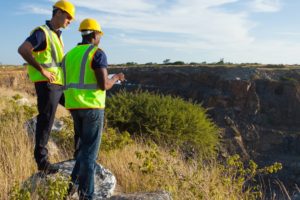
Mining Surveyors work with technology in the landscape to examine a number of aspects regarding mining. Typically, they will investigate landscapes for resource potential, predict deposits using surveying data, interpret and provide information from maps, examine property boundaries and legal aspects and many other elements in the decision to build, maintain, expand or close a mine. Their knowledge and applied science background make them a vital link in the research of the landscape. They may even be part of an engineering team and supervise construction of a site.
Learn more about how to become a Mining Surveyor >>>
Modeling Specialist

Learn more about how to become a Modeling Specialist >>>
Mold Remediation Technician

Damp is a problem in many of our buildings – commercial, industrial and residential. Damp environments, older buildings, those with poor ventilation and buildings in moist environments need to keep moisture and mold under control. That is usually the job of the Mold Remediation Technician. His or her role is to identify problems with damp and remedy them to avoid structural damage and problems to human health associated with damp environments. They are part of a network of Occupational Health & Safety, vital to residential areas and the workplace.
Learn more about how to become a Mold Remediation Technician >>>
Molecular Biologist

Molecular Biologists perform experiments on the molecular level to better understand how small particles behave and operate. These scientists are essential to developing newer and better treatments for various illnesses and diseases. Most Molecular Biologists spend the majority of their time in a lab environment or preparing data reports in an office. Prospective Molecular Biologists must be prepared to obtain a Ph.D. in chemistry, biology, or other related field. Performing postdoctoral work is essential to receiving more training and launching a full-fledged career. Though it is possible to obtain an entry-level position with a Bachelor’s degree, it is extremely difficult to advance without pursuing further education.
Learn more about how to become a Molecular Biologist >>>
Naturalist
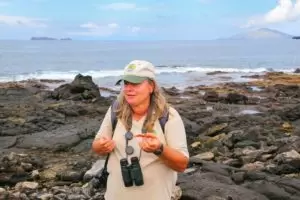
“Naturalism” is one of the oldest of the modern sciences. In the past, many naturalists were amateur observers, sometimes without scientific training, who had the means to travel to observe nature. Today, a naturalist is an expert on the natural world. They are a type of biologist but their interests lie in the general overview of nature interaction including observations regarding evolutionary patterns, environmental impact on species and interactions between living creatures, each other and their environment.
Learn more about how to become a Naturalist >>>
Nepa Ceqa Manager
NEPA (National Environmental Protection Act) and CEQA (California Environmental Quality Act) are pieces of Federal and state government legislation designed to protect the environment. Both introduced in 1970, today their complexity is in line with wider environmental protection laws, requiring employees to manage the practical and documentary aspects of these roles. The US and organizations operating within our borders have a duty and commitment to protect the environment and to comply with evolving environmental laws.
Learn more about how to become a Nepa Ceqa Manager >>>
Noise Expert

Learn more about how to become a Noise Expert >>>
Noise Impact Modeling Specialist

Noise Impact Modeling Specialists are a type of expert on noise analysis dealing with impact models. They will have a range of skills including understanding of statistics, digital mapping and modeling software. They will also have a great deal of knowledge about environmental impact of noise pollution. Because of these broad and important skills, they can work in a wide range of roles. They may act as business consultants, as researchers, or as part of environmental assessment teams. Their skills are transferable, especially in their use of statistics and data analysis.
Learn more about how to become a Noise Impact Modeling Specialist >>>
Oceanographer
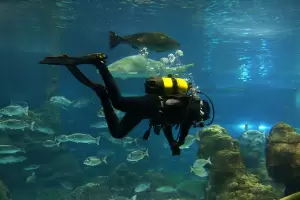
Learn more about how to become an Oceanographer >>>
Open Space Planner

Learn more about how to become an Open Space Planner >>>
Ornithologist

Learn more about how to become an Ornithologist >>>
Paleobiologist

Learn more about how to become a Paleobiologist >>>
Paleobotanist
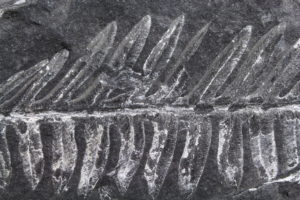
Learn more about how to become a Paleobotanist >>>
Paleoclimatologist

Climate scientists or climatologists study information and data relating to local and global environments as they are today. Paleoclimatologists examine the same information but are slightly different. Instead of taking air and water samples from today, they look at ice cores, sediments and tree rings in an attempt to understand how local and global climate looked in the distant past. Through their work, we know the average temperatures, ice cover and even oxygen levels from millions of years ago.
Learn more about how to become a Paleoclimatologist >>>
Paleoecologist

Learn more about how to become a Paleoecologist >>>
Paleoethnobotanist
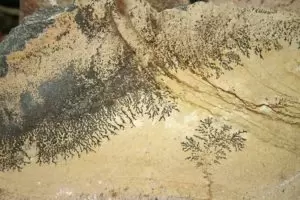
Paleoethnobotanists are a type of archaeologist or anthropologist that studies the cultural importance of plant-based organic materials to people in the past. They will use archaeological methods and tools to understand the relationship between humans in the past and the plant materials that they utilized. They work on archaeological sites and in labs, carrying out tests on plant remains. They may also be called archaeobotanists; the role is essentially the same.
Learn more about how to become a Paleoethnobotanist >>>
Paleomagnetist
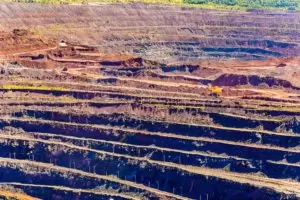
Paleomagnetism is a niche area concerned primarily with aging rocks and inclusions within them. With applications in geology, ecology, archaeology and soil science, they can tell us much about the age of the ecological world around us. They take magnetic readings from organic materials in order to build a picture of an age of items or the landscape. Organic material and sedimentary rocks each have a magnetic marker that these professionals may read.
Learn more about how to become a Paleomagnetist >>>
Paleontologist
Learn more about how to become a Paleontologist >>>
Paleozoologist

Paleozoologists study animal remains from the past. Where paleontologists study only fossilized remains, paleozoologists examine fossils and surviving organic animal remains. This means that they can work with archeologists, paleontologists and anthropologists, fulfilling much the same roles and looking at the same evidence types, consulting and collaborating on projects. The majority of paleozoologists work in academia in archaeology, but some also work in industry for private scientific service units and others for the construction industry.
Learn more about how to become a Paleozoologist >>>
Palynologist

Palynology is the study of plant reproductive material where the plant reproduces sexually rather than asexually. This typically means the study of pollen and spores in terms of their genetic structure, distribution and where they are found in the environment. Palynology has many uses as a discipline from archaeology to botany and plant evolution to the environment as an indicator of environmental change.
Learn more about how to become a Palynologist >>>
Parasitologist

Parasitology is the study of parasites, their hosts and the environments in which they breed and survive. Initially constrained to medical research, it has expanded in the last few decades to examine the role of parasites in environmental sciences – particularly parasites of other animals and plants, and including fungi that only thrive and reproduce my infecting other plants. It’s one of the sciences key to understanding how our ecology works.
Learn more about how to become a Parasitologist >>>
Petroleum Geologist

Learn more about how to become a Petroleum Geologist >>>
Petroleum Technician
Learn more about how to become a Petroleum Technician >>>
Physicist

Spray-on solar cells are shaking things up in the solar power world. Thanks to physicists and other scientists, we can now spray working solar cells onto thin, flexible materials, which can eventually be embedded in windows, cars, and other unlikely objects. "Thin-film photovoltaics" is a burgeoning field. Researchers are working on increasing their efficiency. The next generation of thin-film photovoltaics could change the energy game. Physicist do a lot more than solve equations and study theory. They use their knowledge of physical properties to improve electronics and materials, making them more efficient and better for the environment. They’re enhancing the efficiency of tidal, wave, geothermal, and wind power systems. Physicists are at the cutting edge of solving real-world problems.
Learn more about how to become a Physicist >>>
Physiologist
Learn more about how to become a Physiologist >>>
Pollution Prevention Technician

Learn more about how to become a Pollution Prevention Technician >>>
Primatologist
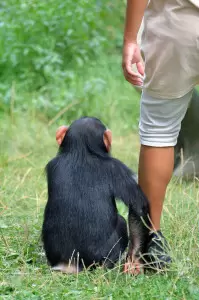
Primatologists are a specific kind of Zoologist that works specifically with non-human primates. Depending on the Primatologist's specialty, people working in this field may have very different responsibilities. For example, some Primatologists may be responsible for studying ape DNA in a laboratory, while other Primatologists may be required to observe wild primates. Though this profession requires different kinds of work in varying settings, fieldwork can often be strenuous and physically taxing. The educational requirements for this profession are quite advanced and may require years of schooling and hard work. Ultimately, Primatologists are important for understanding some of humankind's closest living relatives, allowing us to learn and understand more about ourselves in the process.
Learn more about how to become a Primatologist >>>
Radiation Protection Technician
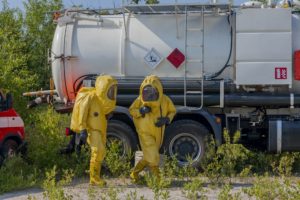
Learn more about how to become a Radiation Protection Technician >>>
Regulatory Compliance Manager
Learn more about how to become a Regulatory Compliance Manager >>>
Remote Sensing Specialist
Learn more about how to become a Remote Sensing Specialist >>>
Safety Director

Learn more about how to become a Safety Director >>>
Safety Supervisor

Learn more about how to become a Safety Supervisor >>>
Sedimentologist
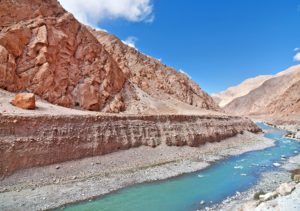
Learn more about how to become a Sedimentologist >>>
Seismologist
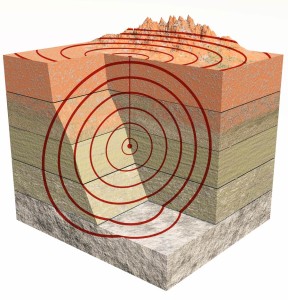
Learn more about how to become a Seismologist >>>
Snake Milker
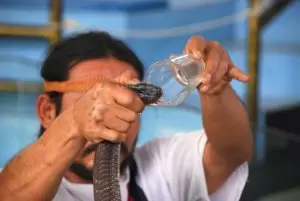
Snake milkers are a tiny subset of herpetologists, a type of zoologist. They are specially trained in the extraction of snake venom and require licensing in order to practice. These species are often protected in the parts of the world where they reside and require specialist handling and certification. Snake milkers remove venom from snakes without harming them for the purpose of medical study, research purposes or to produce an anti-venom when somebody is bitten.
Learn more about how to become a Snake Milker >>>
Speleologist
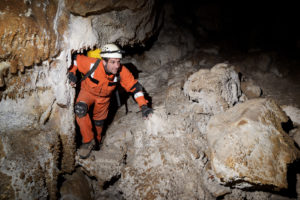
Learn more about how to become a Speleologist >>>
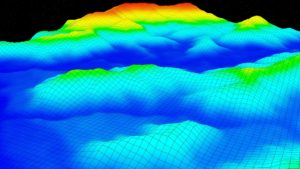
Stratigrapher
Learn more about how to become a Stratigrapher >>>
Treatment Storage Disposal Technician

Treatment, Storage and Disposal Technicians are vital in the modern age. From household waste to industrial chemicals, many substances we use every day are unavoidable. They are toxic but can become safe with the proper handling, care and disposal. Some have been in use since before we understood their hazards. That is why when businesses and households come to dispose of these substances, we require specialists to do so in a safe manner. There are laws on how these substances ought to be disposed – for example to incinerators, to landfill, or sent for processing to make them safe.
Learn more about how to become a Treatment Storage Disposal Technician >>>
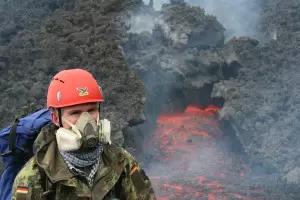
Volcanologist
Learn more about how to become a Volcanologist >>>
Wildlife Biologist

Learn more about how to become a Wildlife Biologist >>>
Zoologist

Zoologists study the behaviors, origins, genetics, health, and life stages of animals. As zoologists specialize in understandingthe biology of a large number of animals, they often work in conjunction with wildlife managers, marine biologists, or veterinarians to help manage animal populations in both captivity and the wild. One of the biggest places of employment for zoologists is, true to the name, within a zoo. Other less-well known places of employment include state parks, laboratories, academia, or environmental conservation groups. Zoologists can choose to specialize in a particular branch such as mammalogy (mammals), ichthyology (fish), herpetology (reptiles), or ornithology (birds). Training for a career as a zoologist is best undertaken with a degree in either biology or zoology. Although it is possible to enter the field with a bachelor’s degree, the attainment of a master’s level or higher is preferred. Given the very high rate of species loss at present, a career as a zoologist is a fascinating one. Zoologists might be involved in day-to-day laboratory, field, or literature based research. They may act within larger interdisciplinary research teams, or work hands on with animals in the development of breeding programs. Other skills that may suit the aspiring zoologist are a familiarity with technology, as high-tech scientific equipment is commonly used within zoology-related research projects.
Learn more about how to become a Zoologist >>>